

 Facebook
 X
X
 Pinterest
 Copy Link
 Seller Series, Part 6: Navigating Contract Negotiations With Confidence
Once your home hits the market and buyers start submitting offers, the energy shifts. The preparation phase is behind you — now you’re evaluating real numbers, real timelines, and real commitments. This is where strategy matters. A strong negotiation isn’t about squeezing every last dollar out of a buyer; it’s about choosing the offer most likely to close smoothly, on time, and with the least drama.
Here’s how to think like a pro when reviewing offers.
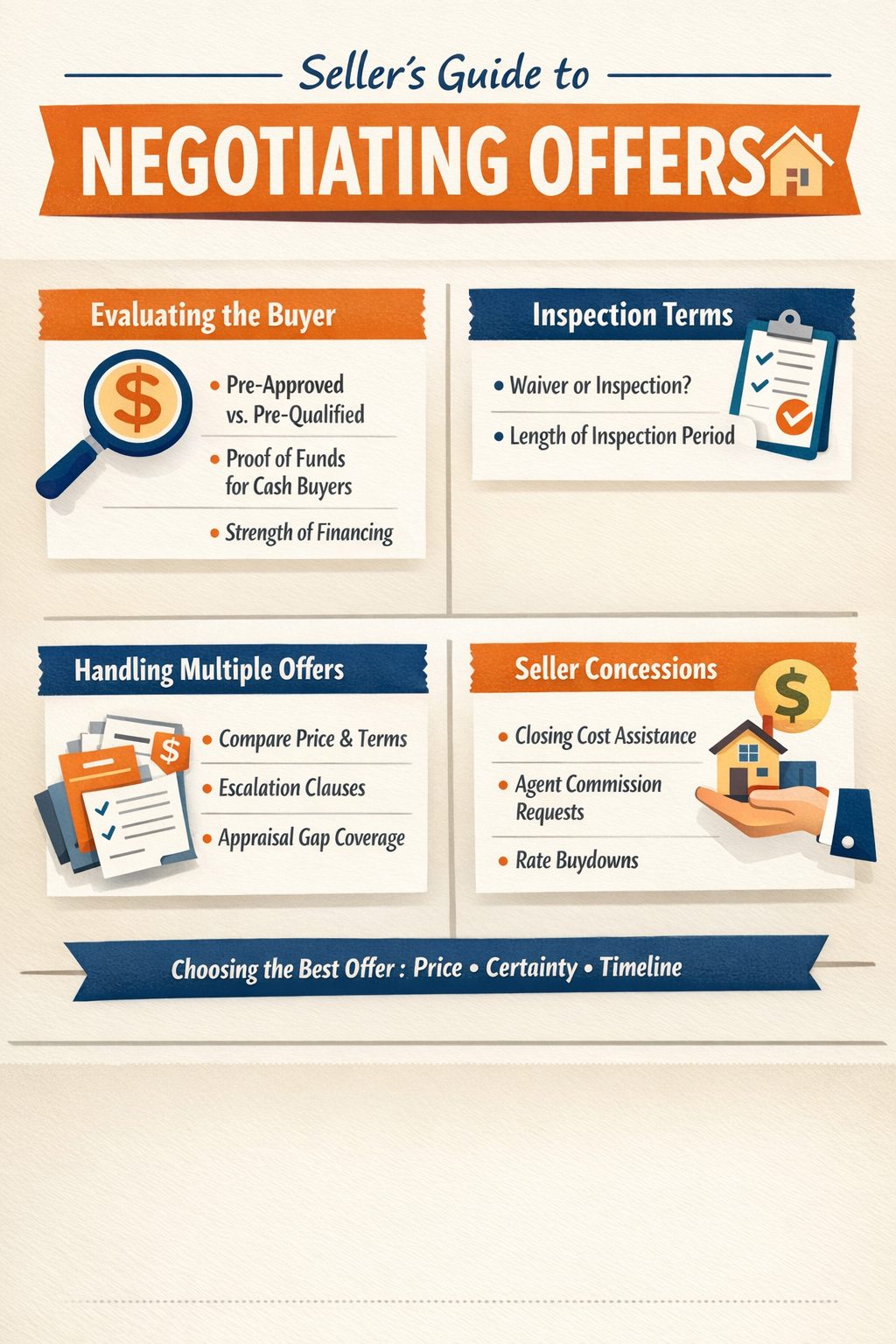
Understanding the Strength of the Buyer’s Financing
Not all “approved” buyers are created equal. The type and quality of a buyer’s financing can dramatically affect the reliability of their offer.
Pre‑Qualified vs. Credit Approved
- Pre‑qualified means the buyer had a conversation with a lender. It’s surface‑level — numbers in, numbers out.
- Credit approved (sometimes called “underwritten approval”) means the lender has already reviewed income, assets, credit, and documentation.
This buyer is far less likely to hit financing turbulence later.
When comparing offers, a credit‑approved buyer often carries more weight than a higher‑priced offer with weaker financing.
Cash Offers: Verify, Verify, Verify
Cash is great — but only if it’s real, accessible, and verifiable.
A strong cash offer includes:
- Proof of funds
- From a recognizable financial institution
- Showing enough liquid assets to cover the full purchase price and closing costs
A screenshot of a crypto wallet or a letter from “Uncle Steve” doesn’t cut it.
Inspection Terms: Where Deals Often Live or Die
Inspection contingencies are one of the most common sources of renegotiation. Understanding the buyer’s approach helps you gauge how much risk you’re taking on.
Inspection Waivers
Some buyers waive inspections entirely to be more competitive.
This reduces your risk of repair requests — but it also raises questions:
- Are they waiving all inspections or just the general home inspection?
- Are they still reserving the right to test for radon, sewer scope, or oil tanks?
A true waiver is rare and usually signals a buyer who is highly motivated.
Length of the Inspection Period
A shorter inspection period benefits you by:
- Reducing the window for surprises
- Keeping the transaction moving
- Limiting the time your home is “off the market”
A 10‑business‑day inspection period is common. A buyer offering 5 days is signaling seriousness.
Multiple Offer Situations: Strategy Over Emotion
When multiple offers come in, it’s tempting to focus on price alone. But the best offer is the one that balances:
- Price
- Certainty
- Timeline
- Buyer strength
- Contingencies
In a competitive environment, you may see:
- Escalation clauses
- Appraisal gap coverage
- Shortened contingencies
- Larger earnest money deposits
Your job is to evaluate the whole package, not just the headline number. The highest offer can still be the riskiest.
Understanding Seller Concessions
Seller concessions are buyer requests for you to contribute financially to their side of the transaction. They’re common — and they’re negotiable.
Buyer Agent Compensation
In the post‑NAR‑settlement world, some buyers may request that the seller contribute toward their agent’s fee.
This is simply another negotiable term, similar to closing cost credits. The key is understanding:
- How much they’re asking for
- How it affects your net proceeds
- Whether the rest of the offer justifies the concession
Closing Cost Credits
Buyers may ask for help covering:
- Loan fees
- Prepaid taxes and insurance
- Title and escrow charges
A concession doesn’t necessarily reduce your bottom line if the buyer increases the purchase price to offset it — but that depends on the appraisal.
Interest Rate Buydowns
A buydown is when the seller pays a fee to reduce the buyer’s mortgage interest rate.
This can:
- Make the buyer’s payment more affordable
- Strengthen their ability to qualify
- Help the deal close
Buydowns are especially common in higher‑rate environments and can be a smart tool when used strategically.
Choosing the Offer That’s Truly “Best”
The best offer isn’t always the highest price. It’s the one that gives you:
- The greatest certainty of closing
- The smoothest path to the finish line
- The timeline that fits your plans
- The least exposure to renegotiation
A clean, well‑structured offer from a strong buyer often outperforms a flashy number with shaky financing or long contingencies.
Final Thoughts
Contract negotiations are where preparation meets strategy. When you understand the moving parts — financing strength, inspection terms, concessions, and competitive dynamics — you can make decisions that protect your interests and set you up for a successful closing.
